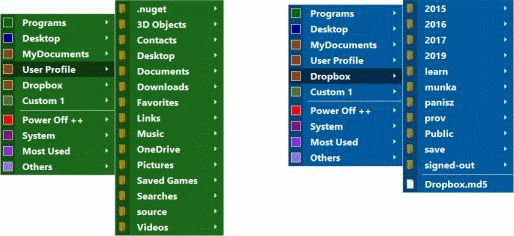
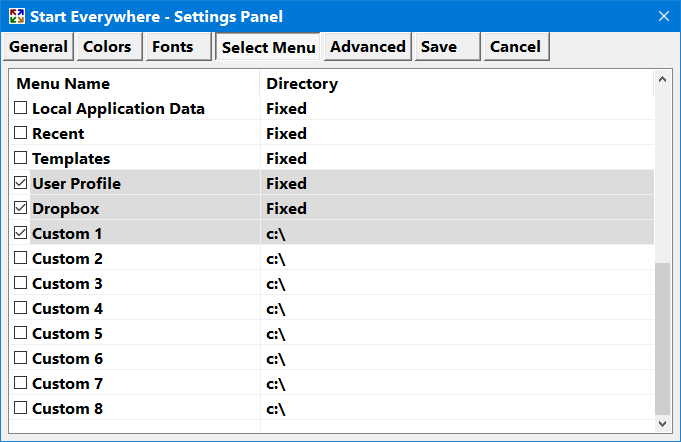
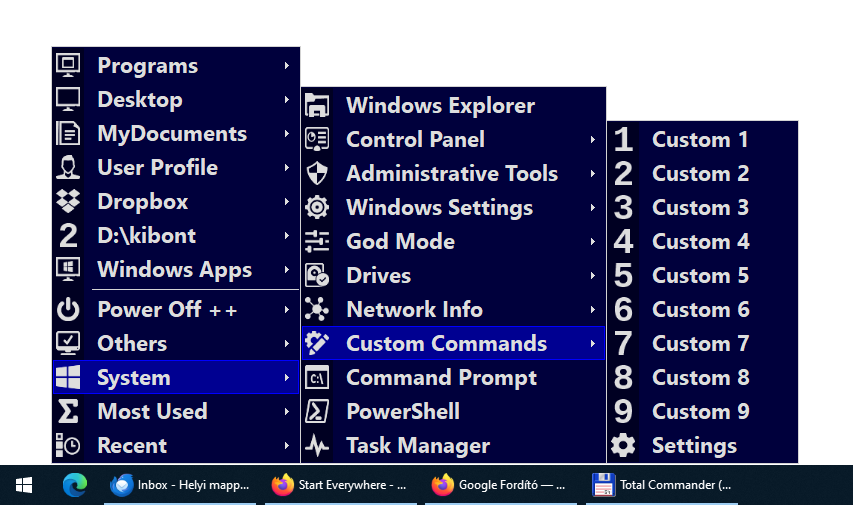
The upper section of the main menu displays the menu items selected in the Settings Panel. A menu item is shown only if the associated device or path is available. If a device (for example a USB drive, external drive, or SD card) is not present, the corresponding menu is not displayed.
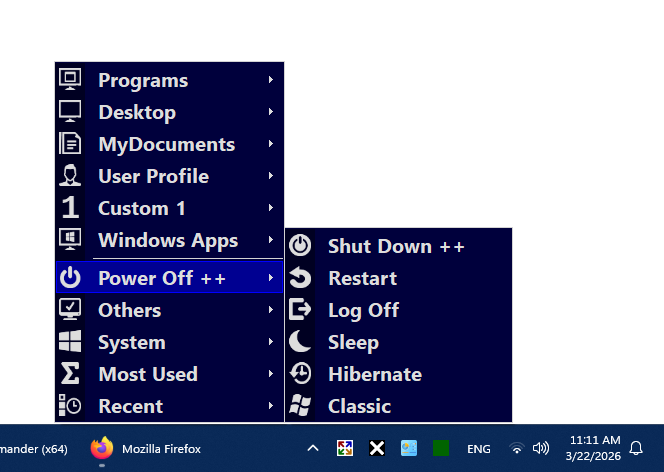
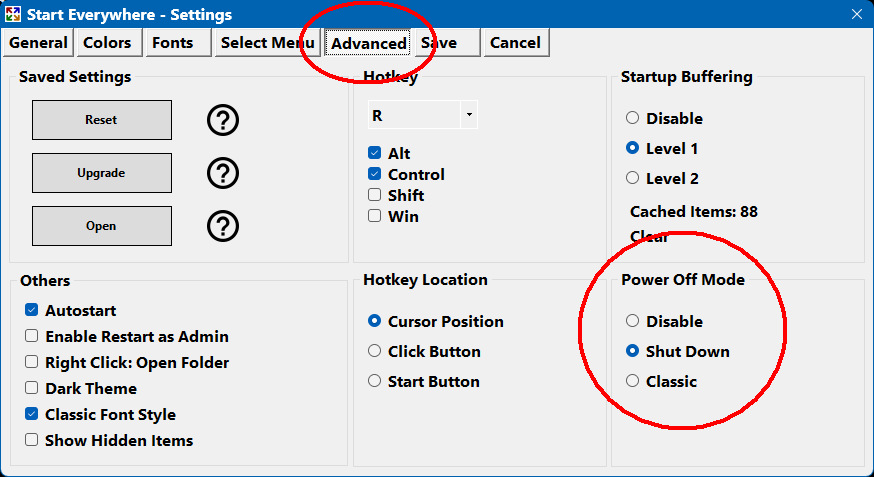
The Power Off menu provides access to various system shutdown options. The ++ symbol next to “Power Off” indicates that shutdown options marked with ++ can be accessed directly from the main menu without opening the submenu. The behavior of the Power Off menu can be modified in the Settings Panel.
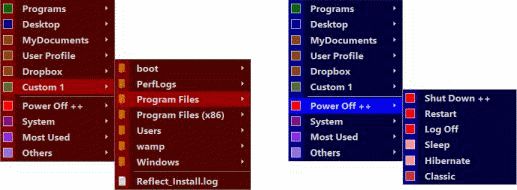
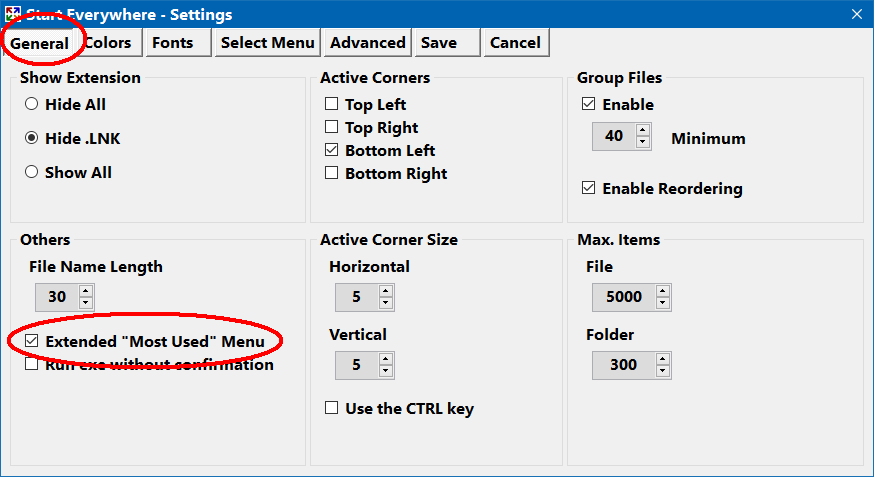
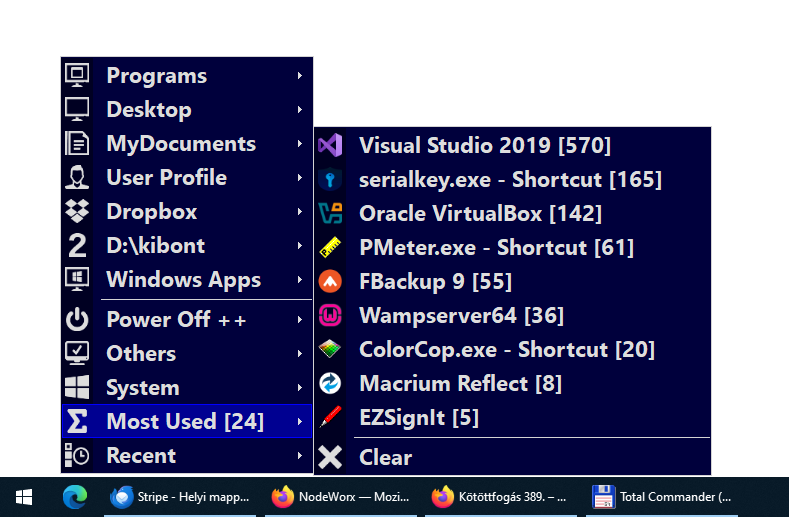
The Most Used menu contains a list of programs and documents most frequently launched from Start Everywhere, ordered by frequency of use. In Extended mode, the number of launches is also displayed next to each item. If this menu becomes slow to respond, it is likely that a large number of entries has accumulated. In this case, clearing the list may improve performance.
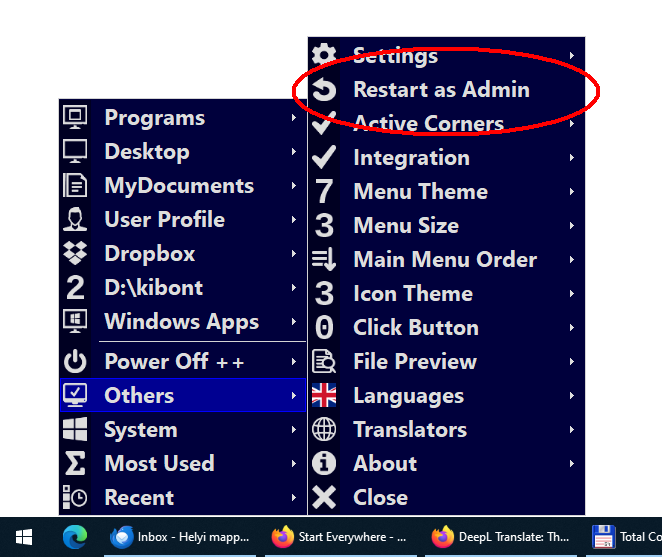
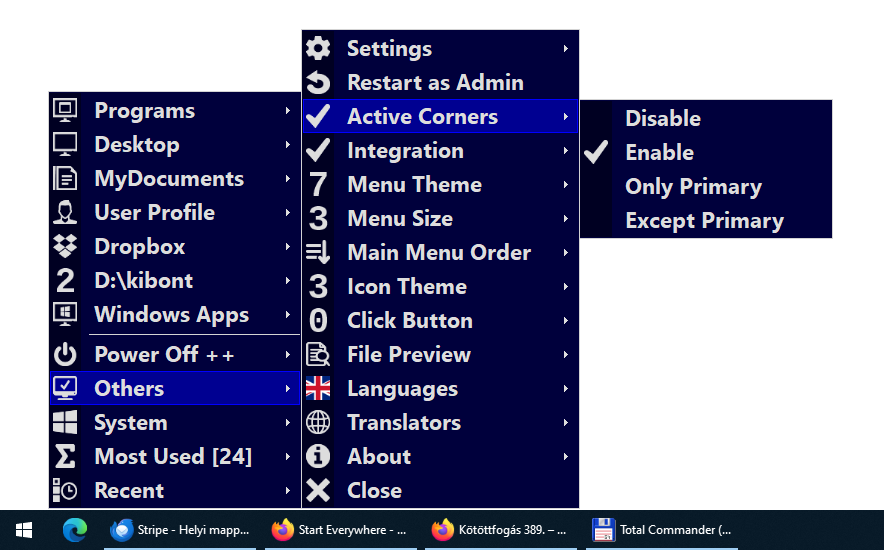
The Others menu provides quick access to settings that affect the behavior and appearance of Start Everywhere. These are options that may need to be changed more frequently.
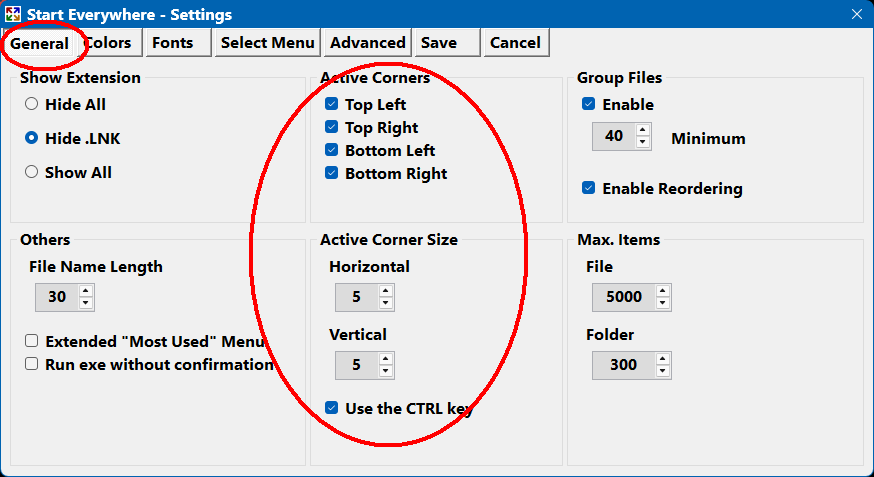
The Active Corners menu allows Active Corners to be enabled or disabled. In multi-monitor systems, configuration options are available not only for the primary display but also for additional screens. Detailed Active Corners settings are available in the Settings Panel.
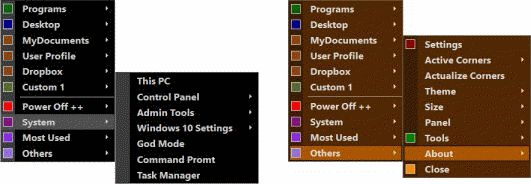
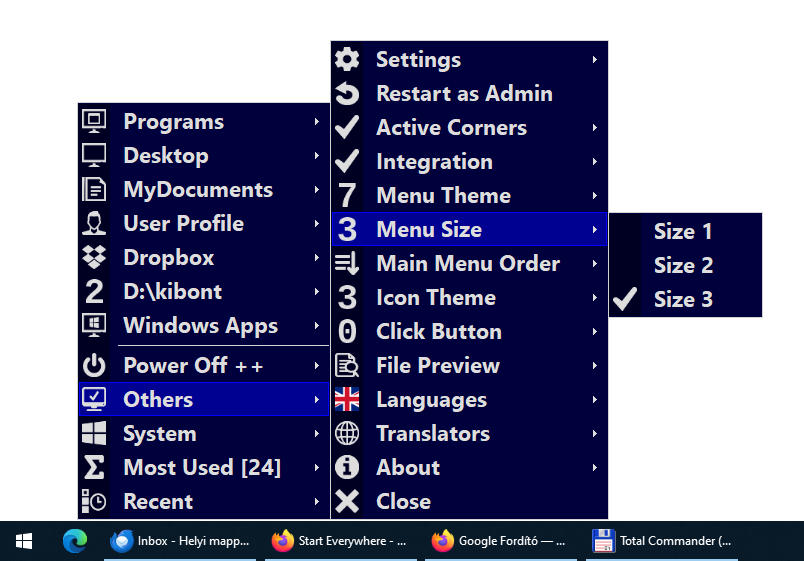
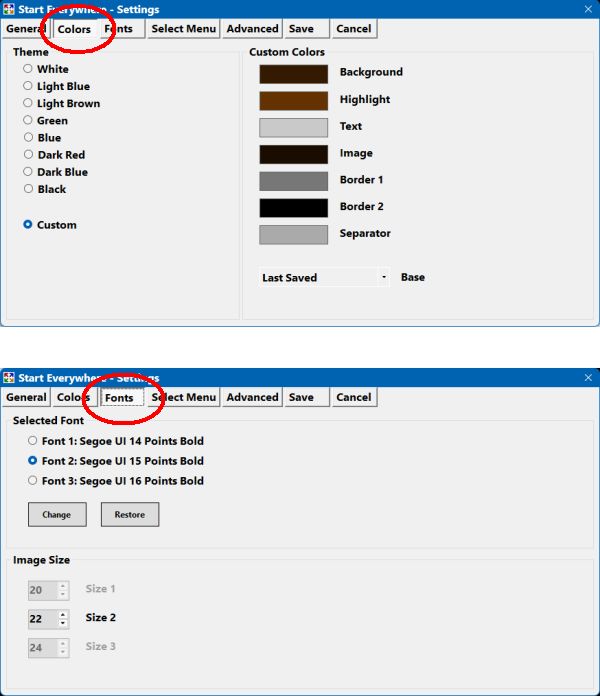
The Theme and Size menus allow quick switching of the visual appearance of the software. Detailed settings are available in the Settings Panel.
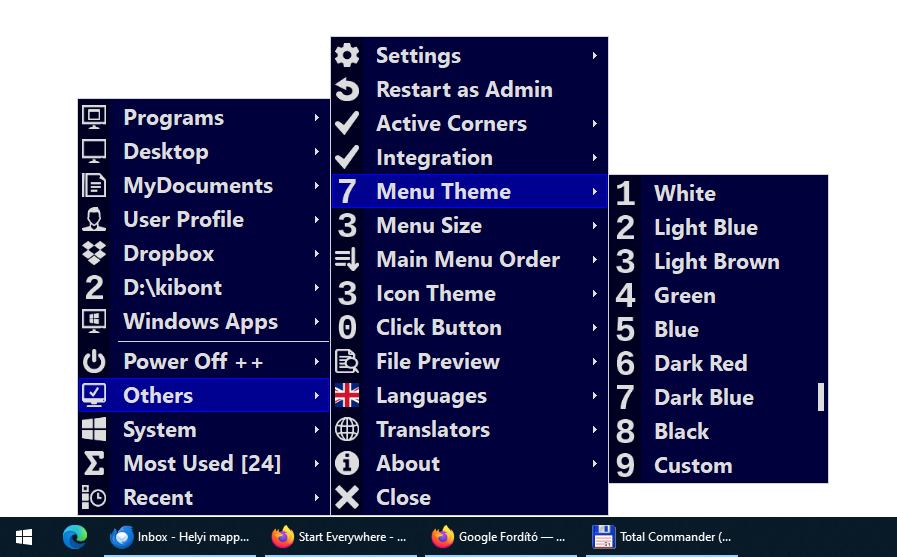
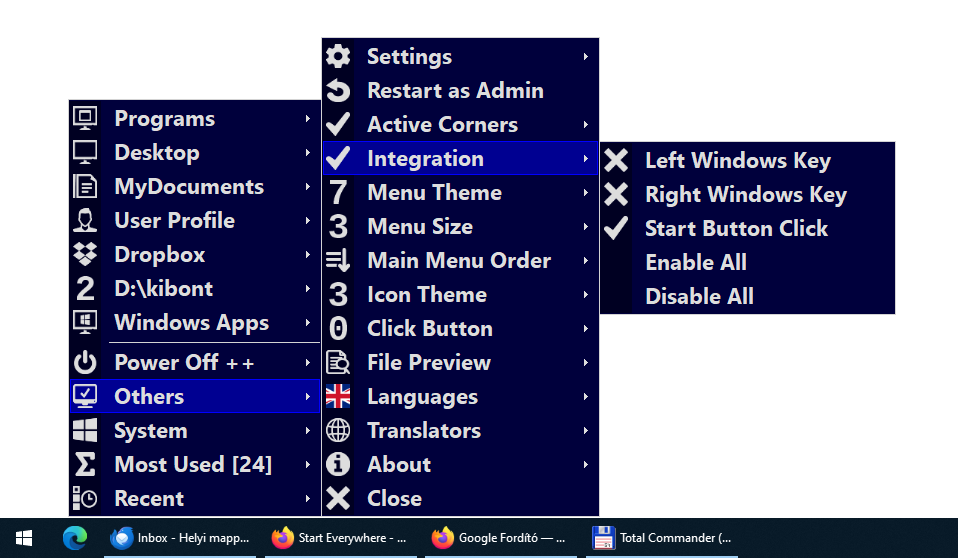
The Integration menu allows partial or full replacement of the default Windows Start menu. If mouse integration is enabled, clicking the Start button on the taskbar opens Start Everywhere. If the left and/or right Windows key is configured, pressing the corresponding key briefly opens Start Everywhere. Pressing the key for a longer period (approximately 2 seconds) opens the original built-in Start menu, allowing both menu systems to be used in parallel.
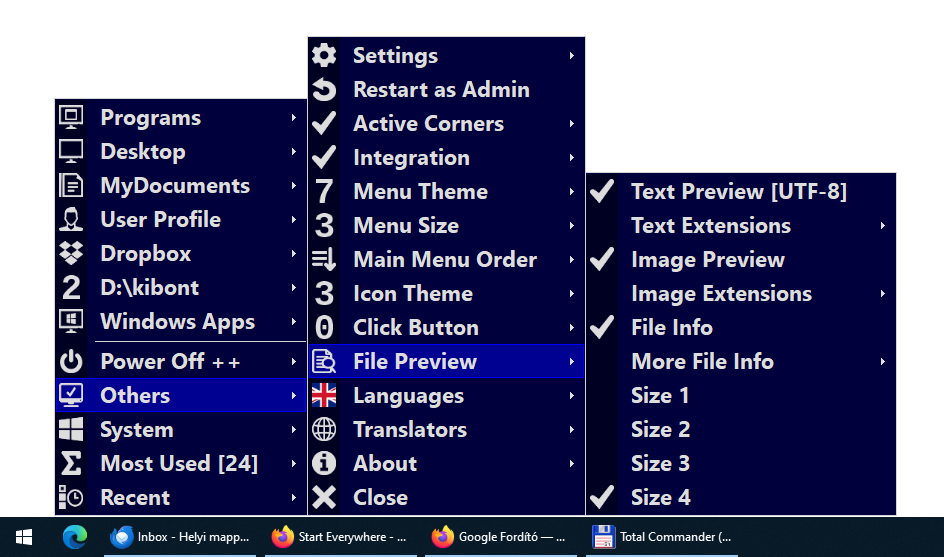
When properly configured, File Preview allows viewing the contents of text and image files without opening them. File properties can also be displayed.
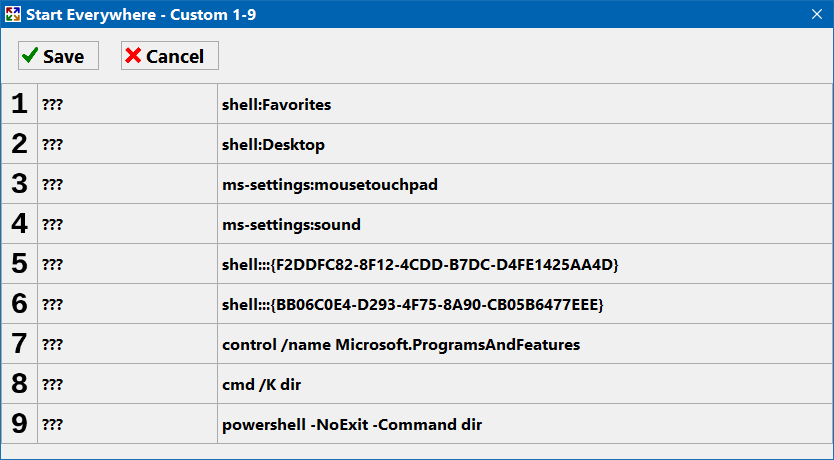
The System – Custom Commands menu allows custom commands to be defined. The default configuration serves only to demonstrate the supported command types and syntax. It is recommended to assign meaningful names to the commands by replacing the default names marked with “???”.
Administrator mode – If a program is launched while holding down the CTRL key, the program starts in administrator mode. Start Everywhere itself can also be restarted in administrator mode. To enable this option, activate “Enable Restart as Admin” in the Settings – Advanced panel. After enabling this setting, the “Restart as Admin” submenu becomes available in the Others menu.